Mayta: a taste of the Amazon in Lima
By Thiago Freitas · The Prime Traveler
World’s 50 Best Restaurants: best historical position in the world ranking, with the year of achievement.
A last-minute reservation, an à la carte meal and cooking that places the Peruvian rainforest at its heart. Our visit to Jaime Pesaque’s restaurant in September 2026.
We managed to book Mayta at the last minute. Therefore, on that visit, we chose the à la carte dishes. We didn't do the tasting menu. What we know of the restaurant came from the choices at our table: the smoked eggplant, the Amazonian ceviche, the grilled paiche and the sirloin with shrimp.
Looking at this meal, the Amazonian influence appears very strongly. It includes freshwater fish, tucupi, chonta, macambo and seasonings. There is a lot of forest in the ingredients that support Jaime Pesaque's dishes, even when the presentation has the precision and delicacy of a contemporary restaurant.
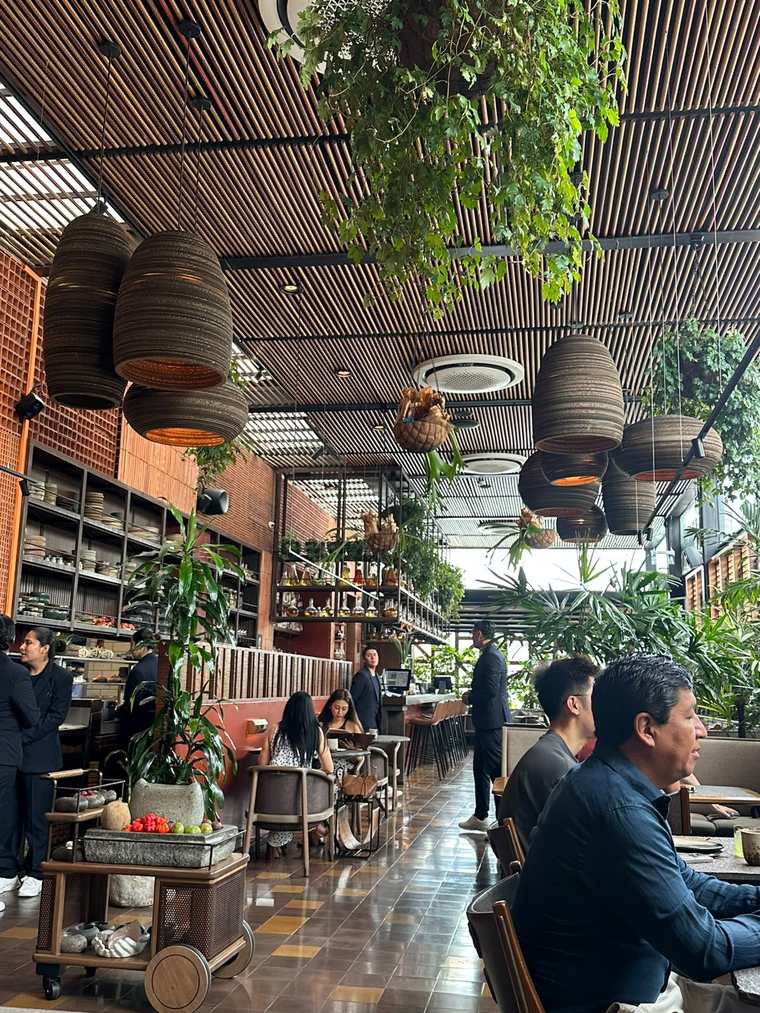
A table in Miraflores, a look at the forest
Mayta was ranked 39th on The World’s 50 Best Restaurants 2025, the most recent global list at the date of our trip. The recognition helps to locate the restaurant, but the restaurant's identity goes beyond position: Pesaque builds contemporary Peruvian cuisine that finds one of its great sources of research in the Amazon. [2] [3] [5]
The forest also makes sense in the environment we find. Plants occupy different heights, the light passes through the dining room and the wooden tones meet the lamps and the textured surfaces. The dishes follow this language: irregular edges, earthy colors and plates that let the food stand out.
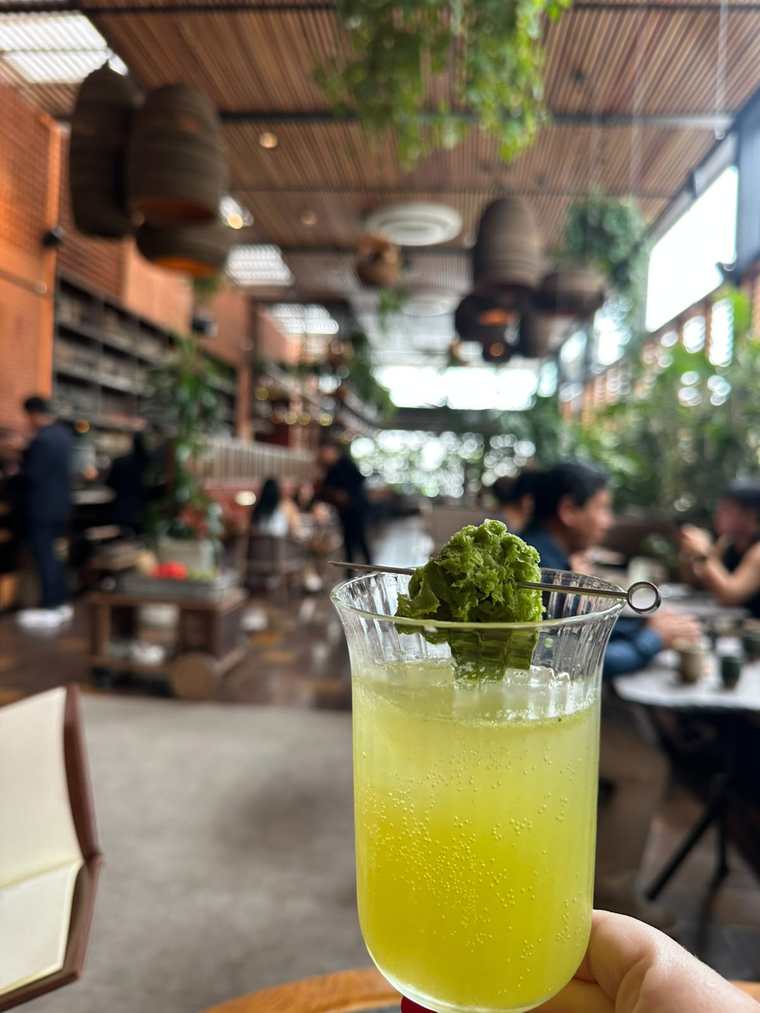
It is a scenario that deserves to be experienced calmly. Even with a reservation made close to the time, sitting there meant making room on the trip to see another part of Peru. Amazonian cuisine would appear in the first dishes.
Smoked eggplant, tucupi and chestnuts
The smoked eggplant arrived in two elongated, golden portions, partially covered in white foam. Green leaves and orange petals dotted the surface. The presentation kept much of the culinary creation hidden, leaving the golden color of the eggplant and its contours visible.
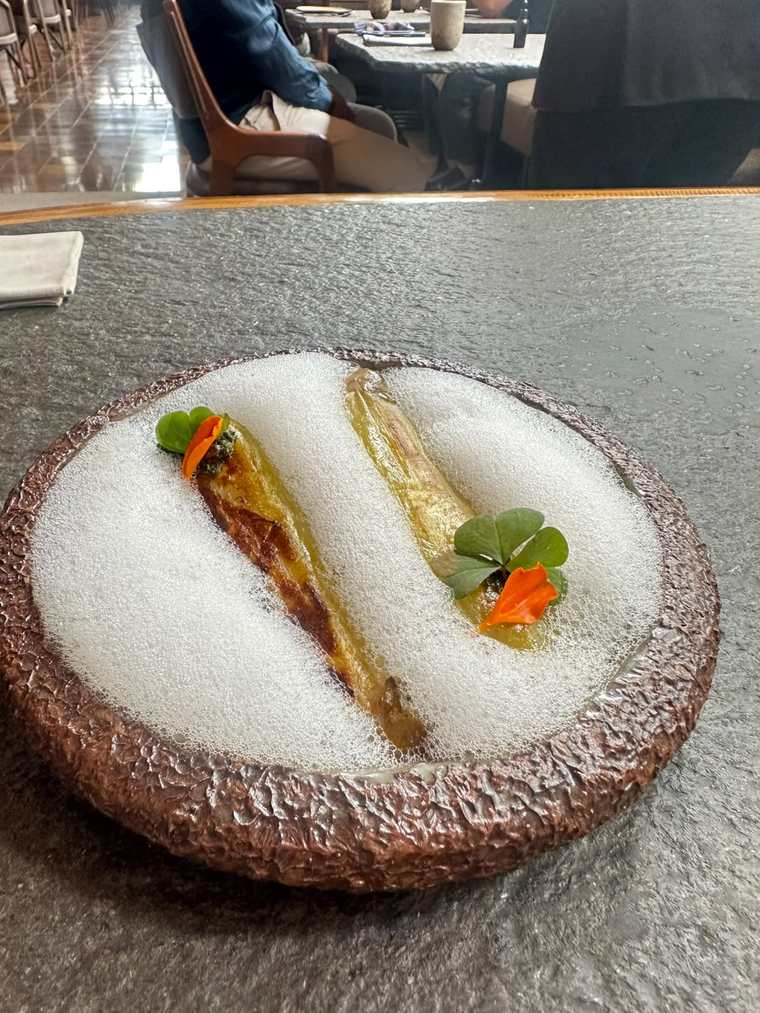
On the menu, Berenjenas Ahumadas combines tucupi, chestnuts, black garlic and herbs. The combination gives more depth to the dish: the eggplant meets the cassava broth so linked to Amazonian cuisine, while the other ingredients expand the vegetable composition. [6]
I like to understand how a vegetable culinary creation can occupy this place in the meal. Here, the reference to the Amazon is already at the center of the dish, before the arrival of river fish.
Amazon Ceviche: the forest also enters the bowl
The ceviche was covered in yellow banana slices, thin and crunchy, with green leaves between them. The assembly was tall and hid part of the fish and liquid in the bowl. At the table, it was necessary to cross this cover to bring together the elements of the culinary creation.
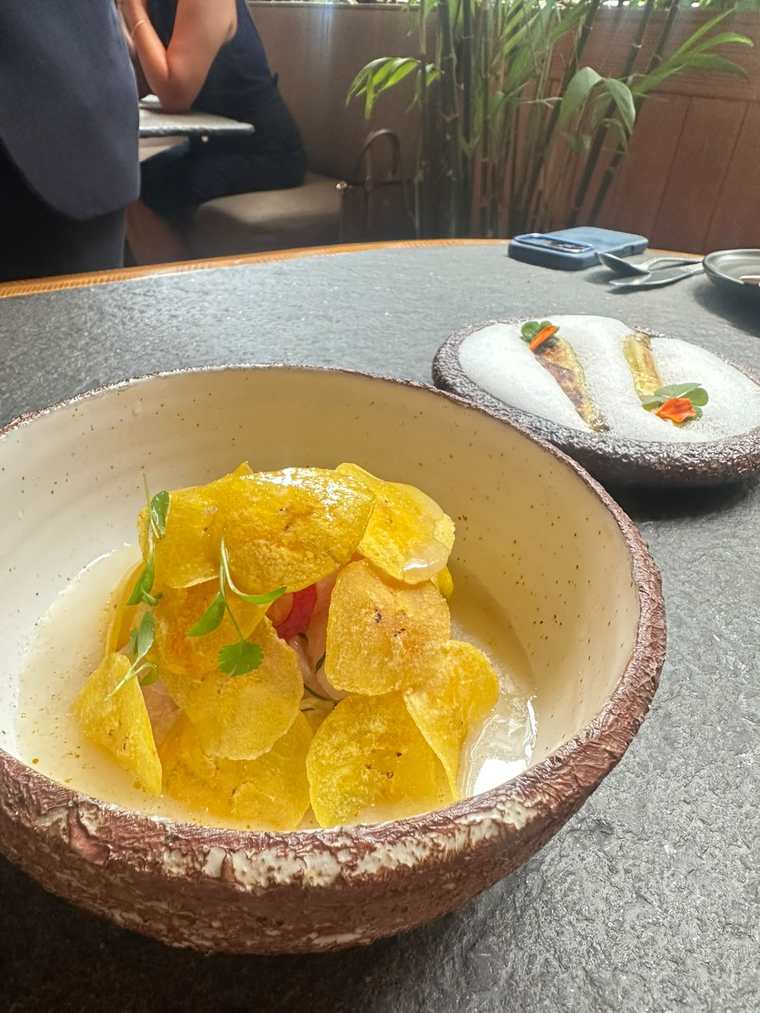
The menu describes fish of the day, chonta, tiger milk, kión, ají charapita and banana in different textures. Kión is ginger; Chonta is a heart of palm present in Amazonian food. The ají charapita brings another regional reference to the composition. The name of the dish, therefore, corresponds to a choice of ingredients that goes beyond the traditional image of a coastal ceviche. [7]
The contrast between the fish, the broth and the banana topping makes this proposal easy to understand when looking at the photograph. The Amazon enters the bowl through several paths, without erasing the ceviche's Peruvian identity.
Grilled paiche, macambo and chonta
In the fish dish, the thick fillet occupied the center of a dark sauce. Over it was a delicate covering and clear, almost translucent blades. The composition corresponds to the Paiche a la Brasa on the menu: Amazonian sauce, regional chorizo, macambo smoothie and chonta.
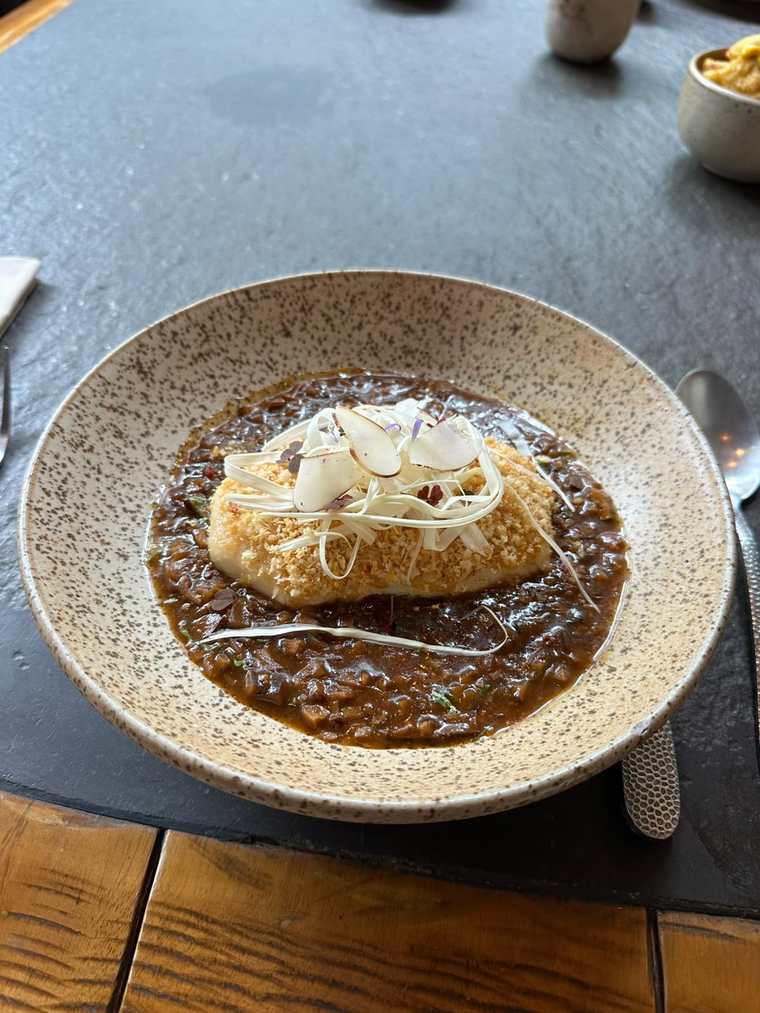
The paiche places a freshwater fish at the center of the meal. Around it, macambo and chonta reinforce the regional origin of the combination. Chorizo adds another tradition of Peruvian jungle cuisine to the recipe. In the photograph, the different components are concentrated on the fillet and the sauce that surrounds it.
This is one of the culinary creations that best explains Mayta that we know. The Amazonian reference remains from the main ingredient to the side dishes. There is assembly and technical work, but the dish continues to present a territory.
Lomo & Langostinos: meat, prawns and the wok
The loin with prawns arrived in a bowl with a more abundant presentation. Pieces of meat and shrimp appeared among tomatoes, onions, herbs and small quail eggs. Separately, a golden accompaniment completed the service.
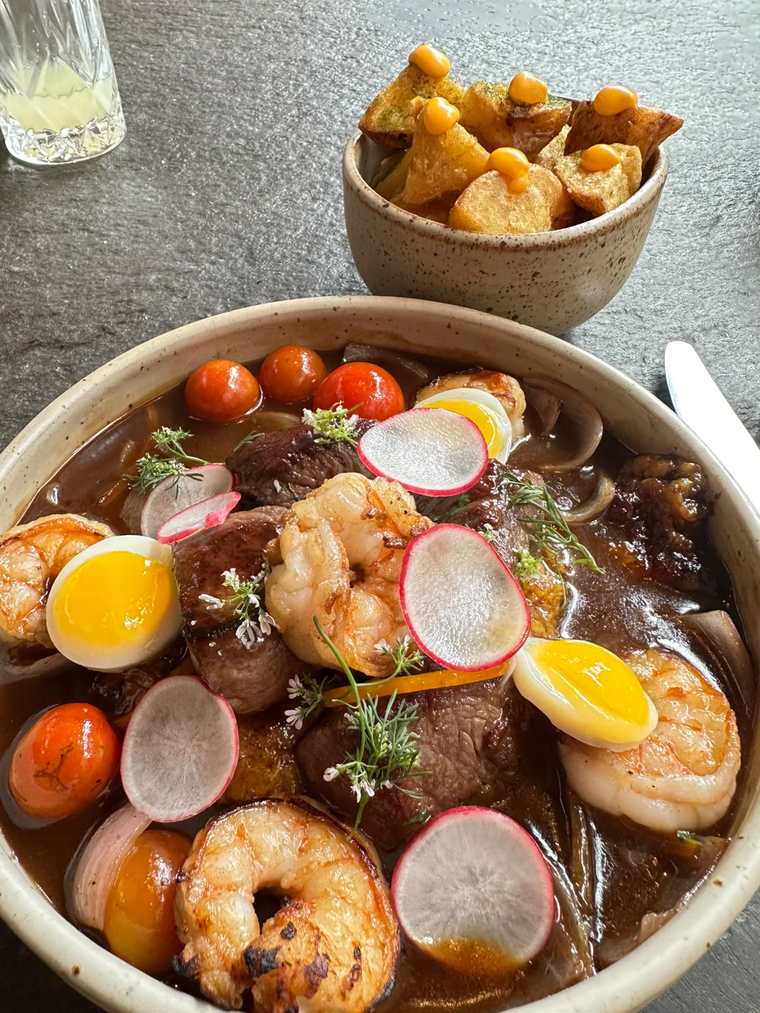
The menu features wok-cooked Lomo & Langostinos, lomo saltado juices, quail eggs, grilled bananas and pepián tacu-tacu. This description clarifies the relationship between the elements of the bowl and the accompaniments. Lomo saltado brings a well-known reference to Peruvian cuisine; the dish brings it closer to shrimp and other textures.
This choice also shows the spaciousness of the restaurant. The strong Amazonian influence coexists with other Peruvian traditions. Our à la carte meal allowed us to go through these references without following a tasting sequence defined by the kitchen.
A last-minute reservation that gained space on the trip
Mayta entered our itinerary close to the time, but it deserves its own report. The photographs from that visit show the green of the dining room, the eggplant under the foam, the height of the crunchy bananas in the ceviche and the paiche surrounded by Amazonian ingredients. These are images that help you understand the personality of the kitchen.
For those who travel for gastronomy, there is value in knowing these differences between the tables in a city. In Lima, Mayta offers an opportunity to take a closer look at the Peruvian forest and the way its products make their way into a contemporary kitchen.
On the Gastrotrip by The Prime Traveler, this choice is part of a curation that takes into account your tastes, dates, restaurant availability and the pace of the trip. Planning in advance expands the possibilities; When a good opportunity arises along the way, it is also worth knowing how to recognize it.
Discover Peru through the tables that make sense to you. Discover Gastrotrip from The Prime Traveler and order your personalized gastronomic itinerary.