Tantris in Munich: exceptional French dining and the art of hospitality
By Thiago Freitas · The Prime Traveler
Michelin: edition indicated above. World’s 50 Best: best historical position, with the year of achievement.
Our June 2025 visit brought together concrete dragons, warm hospitality and French cooking in which the time devoted to sauces is part of the pleasure of dining.
The memory begins with a crust. Thin, golden, crispy on the outside. Inside, the Norwegian crab had a delicate texture, which contrasted with that first bite. On the side, a crab sauce reduced for 24 hours.
This was one of the dishes that stood out to me the most at Tantris, in Munich. I was there in June 2025 and, when I return to that meal in my memory, I realize how much of it was preserved: the food, the colors of the dining room and the way we were received.
The main sequence went through crab, lobster, fish and lamb. The sauces accompanied each step with a presence that really caught my attention. It was a French meal in the middle of Bavaria, in a restaurant that I would want to return to.
Since 1971, four chefs and a history of French cuisine
Tantris opened in 1971, founded by Fritz Eichbauer, a Munich builder and lover of good food who wanted to create a “temple of cuisine” capable of bringing the French spirit to Germany. Eckart Witzigmann was the first chef and began what became known as the “German culinary miracle”. Heinz Winkler followed, taking the house to three Michelin stars in 1981, and then Hans Haas, who for almost three decades shaped the restaurant’s style: direct, product-driven and honest. Since 2021, the current chapter has been written by Benjamin Chmura. 8 9
In 2021, Dahinden’s architecture, now a listed heritage building, was restored and extended. Besides two new kitchens, the house gained its own pâtisserie, boulangerie and chocolaterie, a visible sign of the principle of in-house craft that has always accompanied it. Tantris remains a family business: Felix Eichbauer took over his father’s work in 2006, and Sabine Eichbauer has been CEO since spring 2026. 9
In 2025, Tantris had two Michelin stars and held 73rd place on the extended list of The World’s 50 Best Restaurants. In the 2026 Michelin Guide, the restaurant kept its two stars, and Tantris DNA, another room of the house, has one. Under Benjamin Chmura, the kitchen remains tied to French tradition, with attention to ingredients, textures and sauces. 1 2 3 9
I already had high expectations. Still, it was at the table that the restaurant gained personal meaning. The story arouses curiosity; The experience is what makes you want to tell what happened.
Dragons, colors and a dining room that has personality
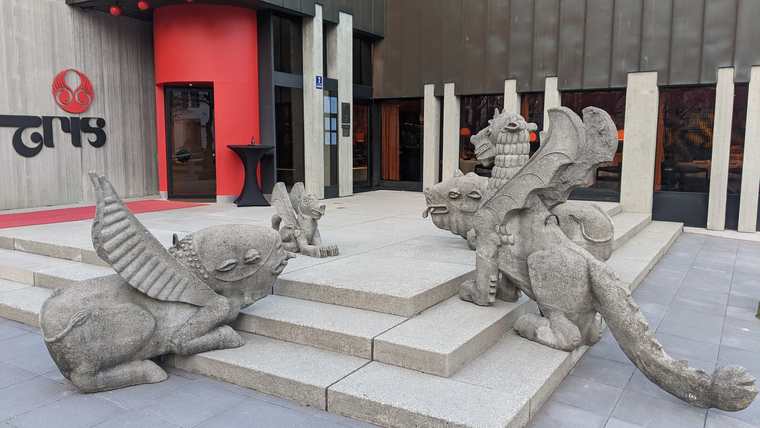
Arrival already announces a different place. The concrete sculptures by Bruno Weber look like creatures from an imaginary bestiary: they resemble dragons and guardian animals, with exaggerated shapes that give the entrance an almost fantastic air. This was my visual reading of them, an association that accompanies the feeling of entering another universe. 4
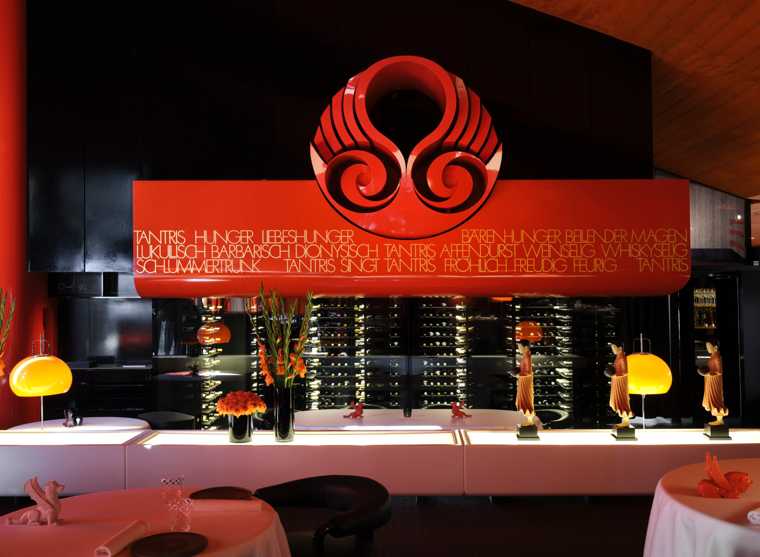
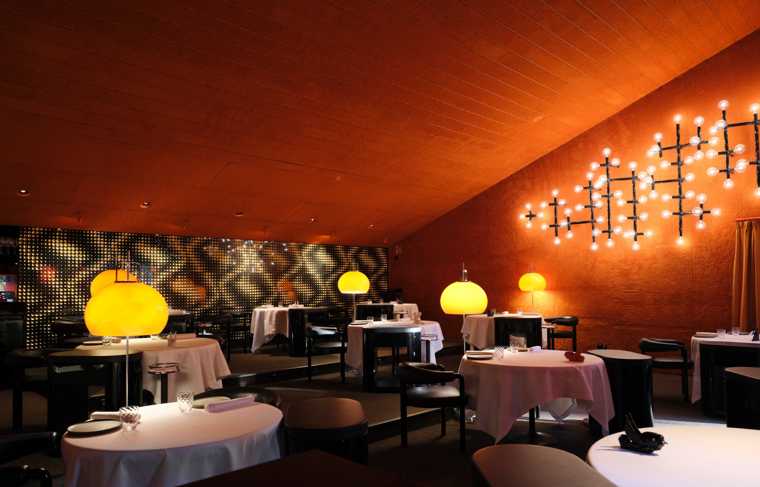
The building by Justus Dahinden, opened in 1971, has the presence of concrete and an architecture that is part of the restaurant's identity. Inside, lobster red and truffle black — as the restaurant itself describes its palette — coexist with warm oranges, rounded lamps and white tablecloths. There is an impression of fantasy and references that take me back to the East, without the restaurant losing the striking personality of the 1970s. 3 4 5
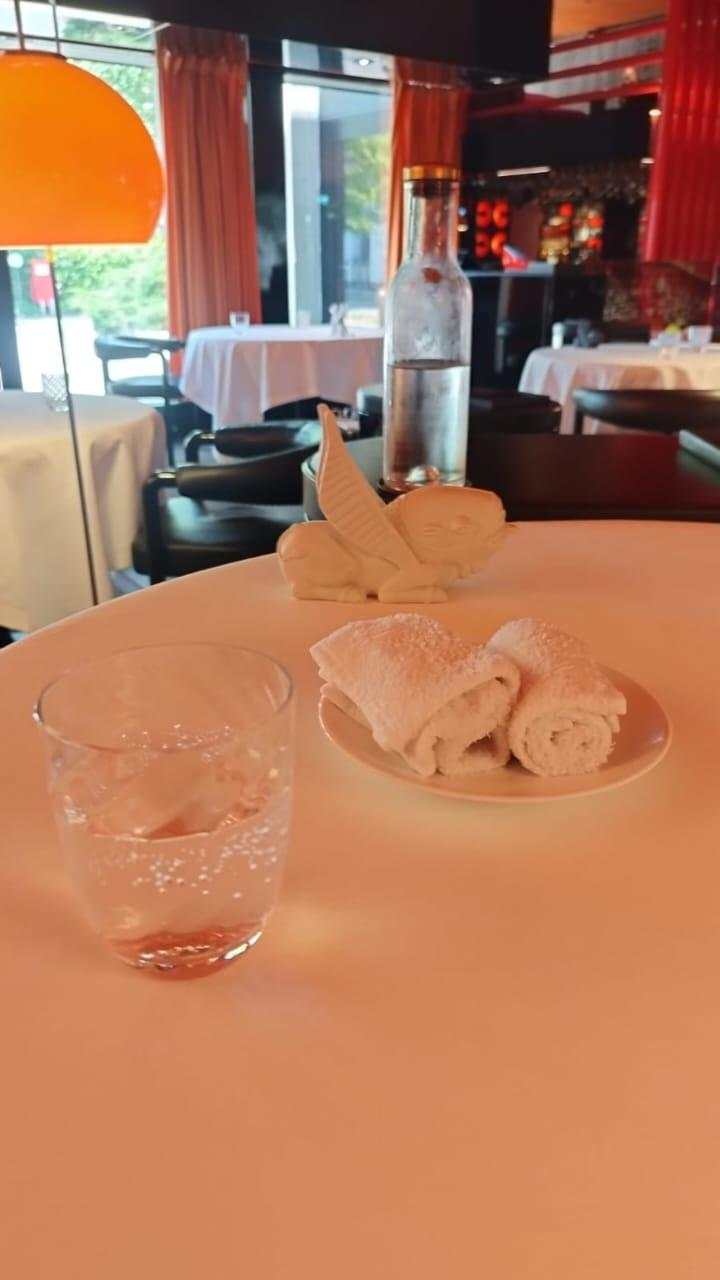
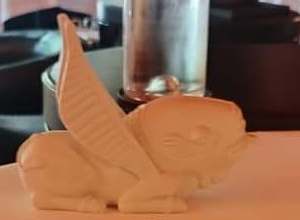
And the animals appear again on a small scale. In our photographs, a white creature with a raised tail and an expressive face keeps company with the first courses. The dragons in Bruno Weber have handmade porcelain versions from the Nymphenburg manufacture. On the table, this detail brings the fantastic side of the facade closer to something intimate, which we can observe between conversations. 6
A welcome that made me feel at ease
The service deserves to appear early in this report because it was part of everything that came after. It was impeccable, with a cordiality that made us feel very comfortable. The attention of the staff accompanied the meal without making it too heavy or ceremonious.
I could have imagined a more serious atmosphere at a large table in Munich. What I found was very friendly hospitality. I will never forget how well we were treated that day.
For me, this has a lot of value. I want to enjoy the food, talk and feel good about where I am. When a team manages to combine care and naturalness, the memory of the visit takes on another dimension.
Starters and first details at the table
Before the main sequence, small starters arrived distributed across different dishes. There were reddish culinary creations, others covered in clear sheets and small portions with dots of cream and flowers. The shapes varied, and the white crockery made the details stand out.
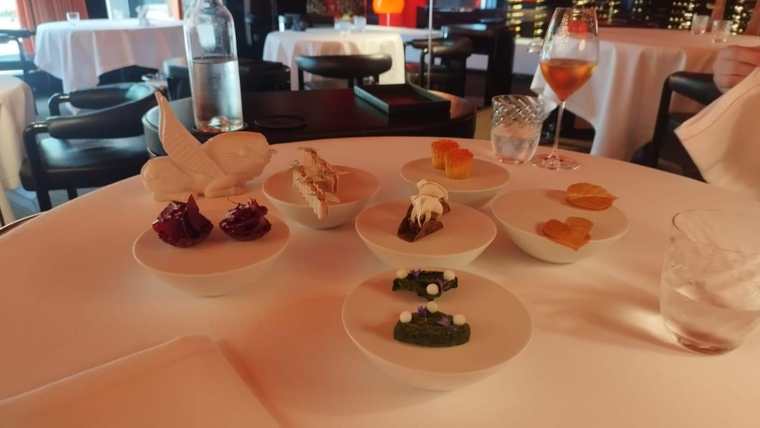
It was a beginning that invited us to look and experiment with curiosity. The little dragons were still there, part of the table among the plates, glasses and conversation. When reviewing the photos, I like to notice these details that accompanied the food without competing for attention with it.
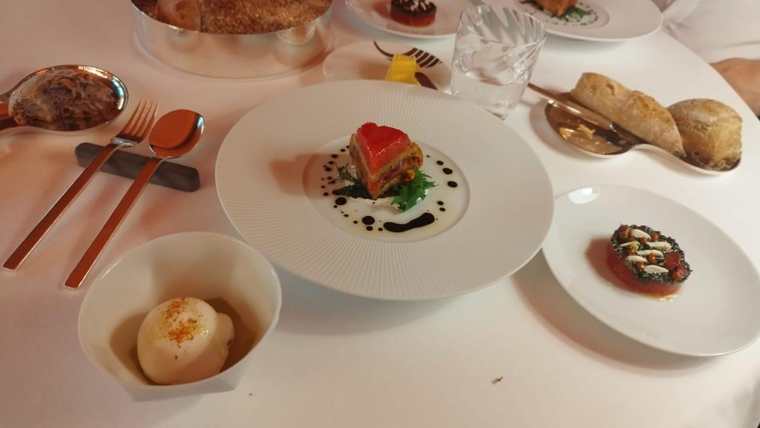
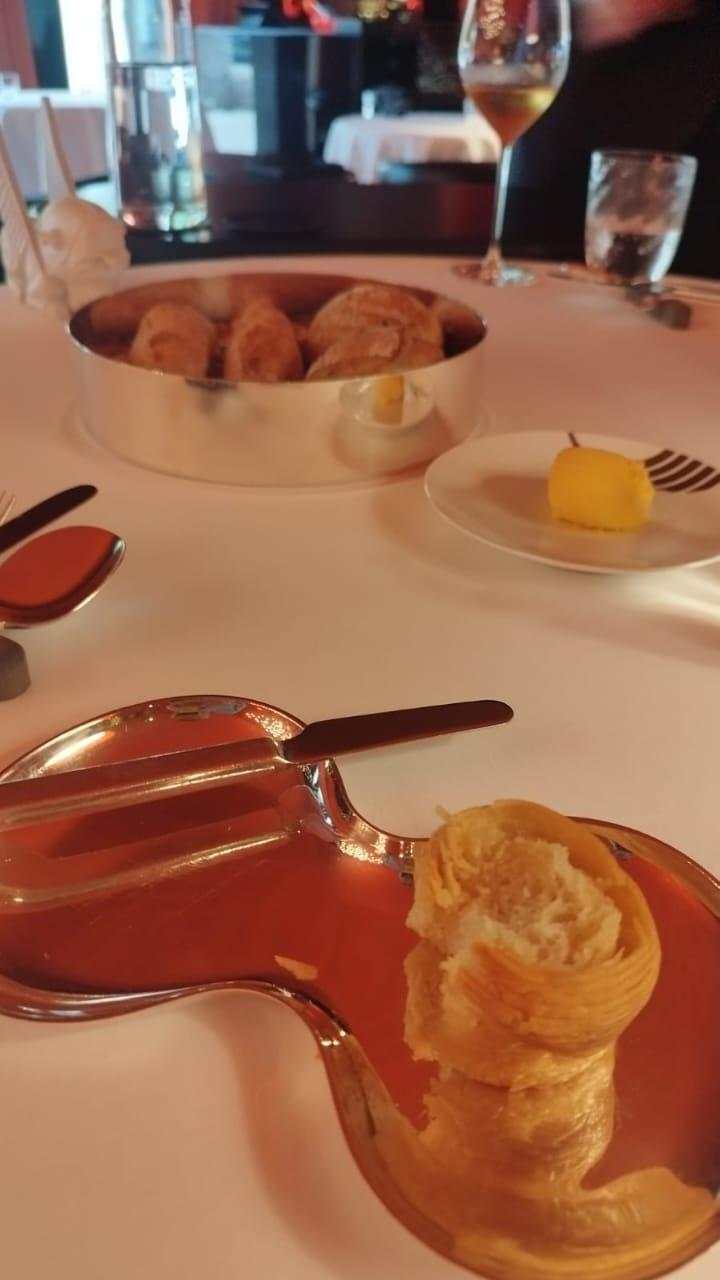
The bread and butter service was also recorded. The basket, the shaped butter and the silver utensils made up a care that already appeared before the main dishes.
Norwegian crab, caviar and a 24-hour sauce
The first of the main dishes I remember was the Norwegian crab with caviar. The golden surface formed a thin crust, and the contrast with the texture of the interior was one of the best parts of the culinary creation.
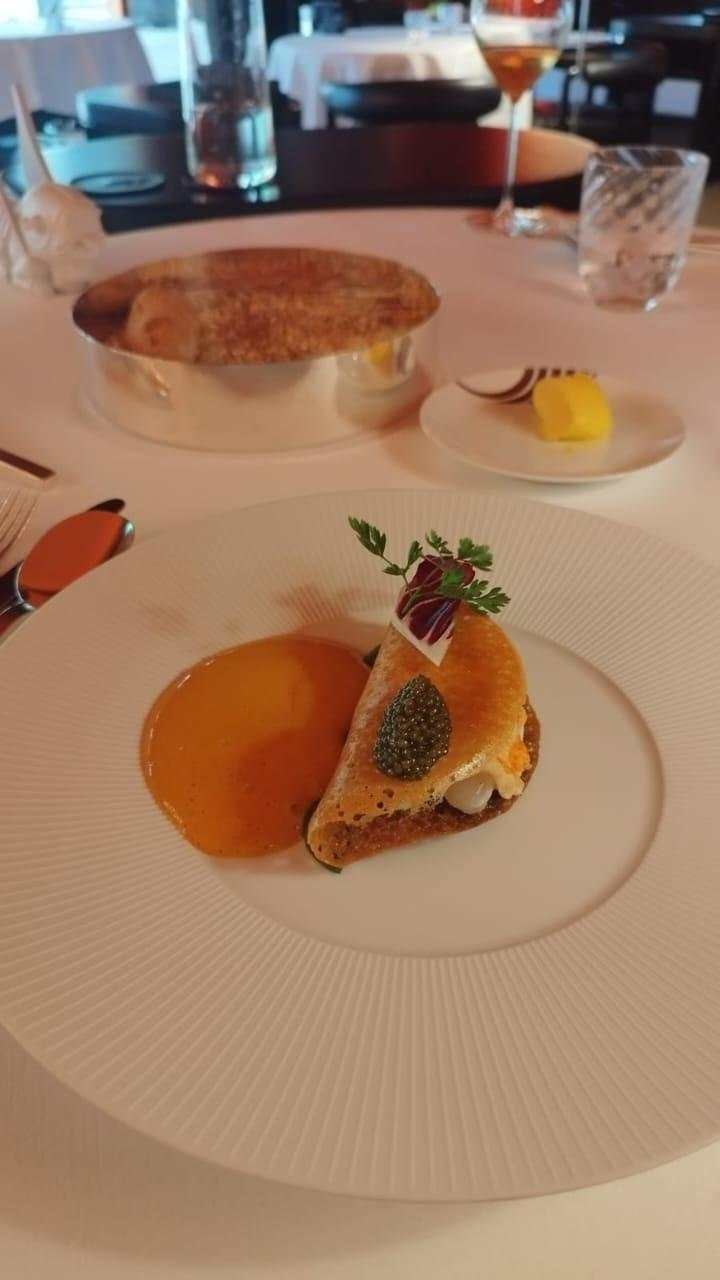
The information about the sauce stayed with me: a crab reduction prepared over 24 hours. Knowing this made me pay even more attention to the combination. There was the crunch, the delicacy of the crab and that sauce bringing together the flavors in the same bite.
It's the dish that comes to mind first when I try to explain that meal. The image helps to remember the presentation, but it is the contrast when chewing that stands out the most.
Then the lobster
After the crab, came the lobster, presented among vegetables, delicate blades and yellow flowers. The sauce occupied part of the dishes, leaving space to understand the different elements of the dish.
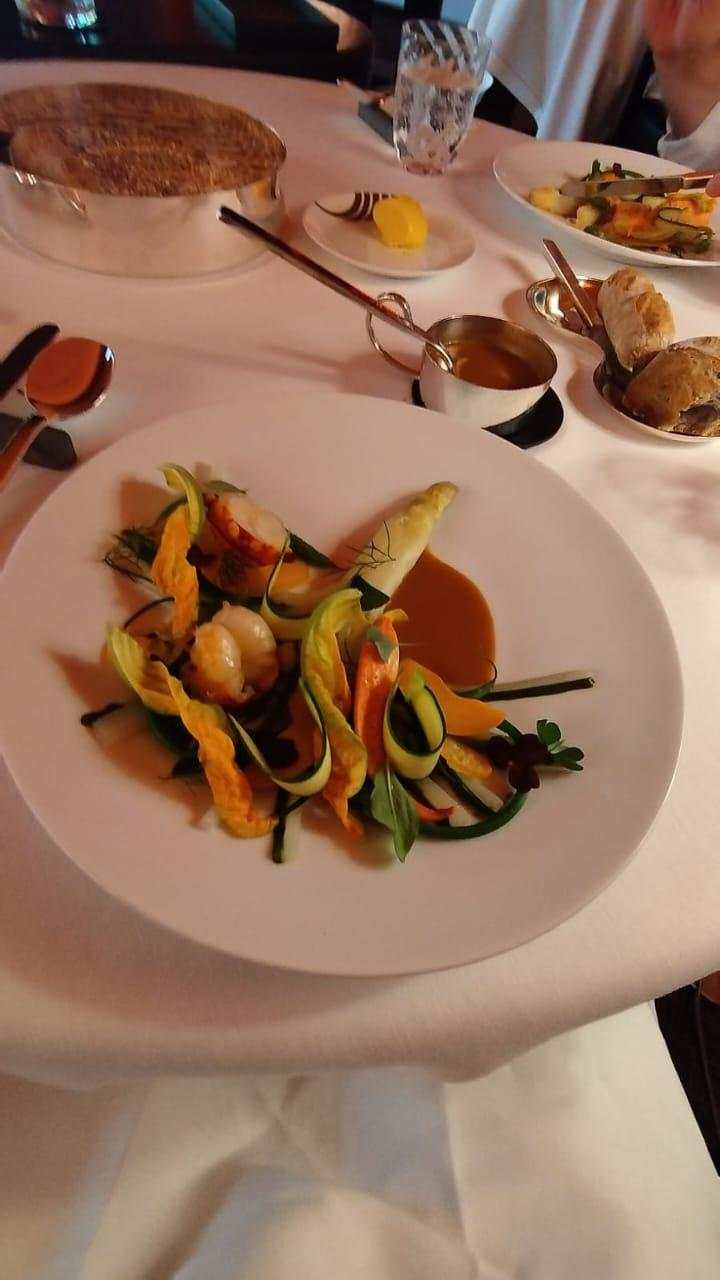
The composition had color and movement. After the browning of the crab crust, it was a beautiful change in presentation. The side dishes formed an important part of the set, while the lobster remained the center of the dish.
Fish and the common thread behind sauces
After the lobster came the fish, before we got to the meat. This transition between courses helps reconstruct lunch as a sequence, with each step preparing the next.
In my memory of that day, long reduction sauces accompanied the dishes and gave unity to the meal. The reference to 24 hours of preparation stood out to me precisely because it reveals work that takes place long before the client sits down at the table.
Maybe that's one of the reasons why I associated that experience so strongly with great French cuisine. The ingredient had its space, and the sauce added a decisive part to the culinary creation.
The lamb, at the end of the main sequence
The lamb came after the fish, pink in the center, with the garnishes arranged around it and the dark sauce enveloping the base of the dish.
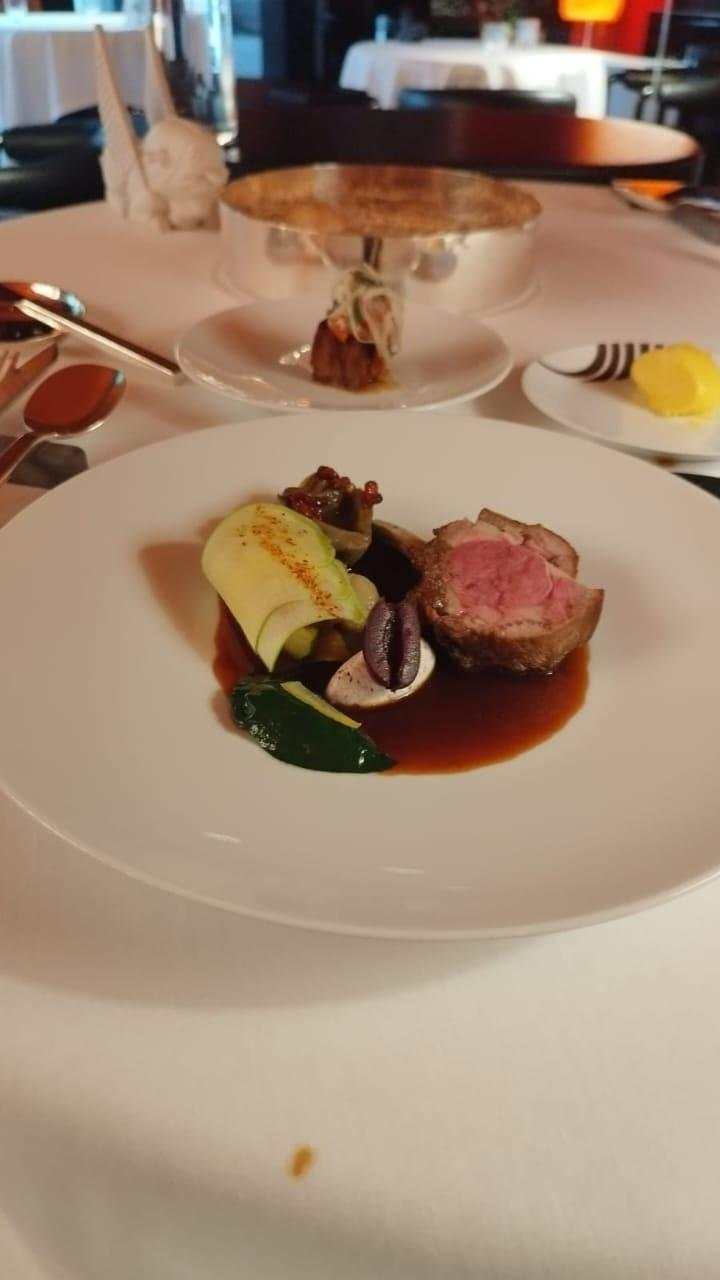
After the crustaceans and fish, meat concluded this part of the lunch. The main ingredient changed, but the care with the sauce and what accompanied each portion continued.
When I resumed this story, I realized that I could spend a lot of time telling the details. Some were more accurate than others. The admiration for the kitchen's work, however, remained very clear.
A large wine cellar, even on a visit without wine
That day, I couldn't drink wine. The experience was focused on the food and the welcome, but the wine cellar deserves a place in this report due to the size of what Tantris brings together.
The official November 2025 letter is 97 pages long and includes great Champagnes, Burgundies and Bordeaux. Certain wines are so rare that the restaurant has limits on sales per table, so that more customers have the opportunity to find them on the menu. 7
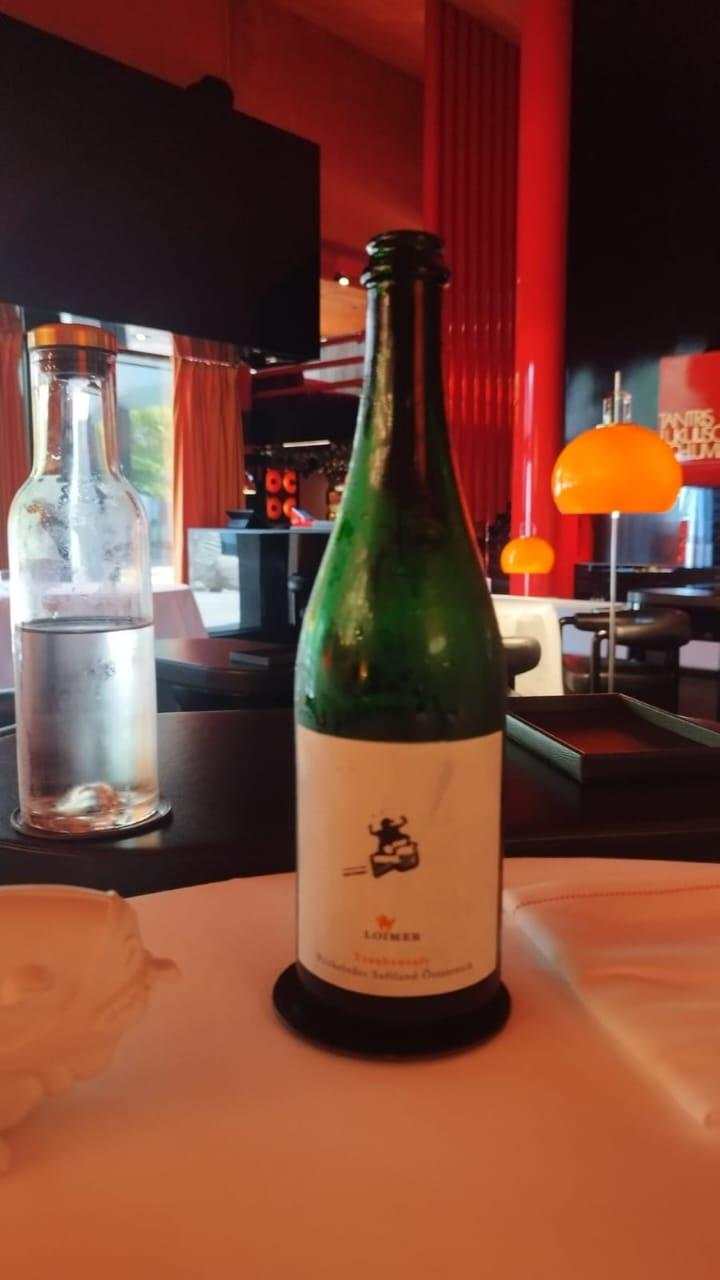
The selection below was seen in this letter from November 2025, after our lunch. These are possibilities from the cellar, not the wines I consumed on that occasion.
- Dom Pérignon Plenitude 2 2002
- Krug Collection 1995
- Jacques Selosse Substance — disgorgement 2023
- Jacques Selosse Millésime 2008 — disgorgement 2021
- Domaine de la Romanée-Conti Romanée-Conti Grand Cru 2012
- Domaine de la Romanée-Conti La Tâche Grand Cru 1951
- Domaine de la Romanée-Conti Romanée-Saint-Vivant Grand Cru 2005
- Château Lafite Rothschild 1982
- Château Latour 1949
- Pétrus 1978
The October 2026 press material introduces chef-sommelier Noris F. Conrad, who joined the house in September 2025, that is, after my visit. His style is described as “progressive drinking, with respect for the classic”, with special attention to mature Rieslings and precise pairings. 9
For those who also travel for wine, finding vintages and producers like this can be an important part of choosing a restaurant. The conversation with the sommeliers and the availability of bottles deserve to be included in the planning of the visit.
Tantris Maison Culinaire today
Tantris today brings together three spaces under one roof. The Tantris restaurant, with two Michelin stars, serves menus that change with the seasons and translate haute French cuisine in a modern, precise way. Tantris DNA, with one star, is the à la carte room devoted to classic French cooking, with dishes to share and tableside service: carving, sauce trolleys, dessert and cheese trolleys, using the original 1971 silverware and service carts, restored. The Tantris Bar completes the house. The house is a member of the Les Grandes Tables du Monde association. 9
The team below is the one described in the October 2026 press material and is not necessarily the one that served me in June 2025. Benjamin Chmura, born in Ottawa in 1989 and trained at the Institut Paul Bocuse in Lyon, has been chef since 2021 and Executive Chef since May 2023, with stints at Auberge de l’Ill, Hôtel George V in Paris, The Greenhouse in London and Troisgros. According to the house, all products come directly from farmers and producers. Emma Betti, Swiss from Lausanne, leads the pâtisserie, boulangerie and chocolaterie; she worked with Yannick Alléno, at Cheval Blanc Courchevel, Écriture in Hong Kong, and at Alain Ducasse’s restaurant in Kyoto. She arrived after my visit, between the end of 2025 and the start of 2026. Jenny Lang runs the service at Tantris, and Lena Le Duy is in charge of Tantris DNA, where she also works as sommelière. 9
Practical information, according to the press material: Johann-Fichte-Straße 7, 80805 Munich. Both restaurants are open Wednesday to Saturday, from 12:00 to 16:00 and from 18:30 to midnight; the bar is open Wednesday to Saturday, from 18:30 to 1:00. Sunday, Monday and Tuesday are days of rest. Confirm hours and reservations at tantris.de before travelling. 9
One of the great French tables outside of France
I left Tantris with one conviction: for me, it was one of the best French restaurants in the world outside of France. It's a personal impression, formed by what I ate and the way I felt at that table.
I remember the crispy crab on the outside, the sauces, the lobster and the lamb. I also remember the porcelain dragons, the orange light and the friendly service. The kitchen explains the admiration. The welcome helps to explain why the visit remains so alive.
A gastronomic journey is built on choices like this. There are few meals on each itinerary and many possible addresses. Knowing the style of a house, considering traveler preferences and organizing reservations in advance gives each table the space it deserves.
This is the work of the Gastrotrip and The Prime Traveler: to design a personalized gastronomic itinerary, connected to destinations, dates, hotels and your tastes, with each restaurant checked by the team.
Some tables become part of the story of a trip. Discover the Gastrotrip by The Prime Traveler and order your next personalized gastronomic itinerary.